How to store printed photographs so they last
What damages a print, the temperature and humidity numbers archives use, how to handle a photograph, what photo-safe means, and which albums are safe.
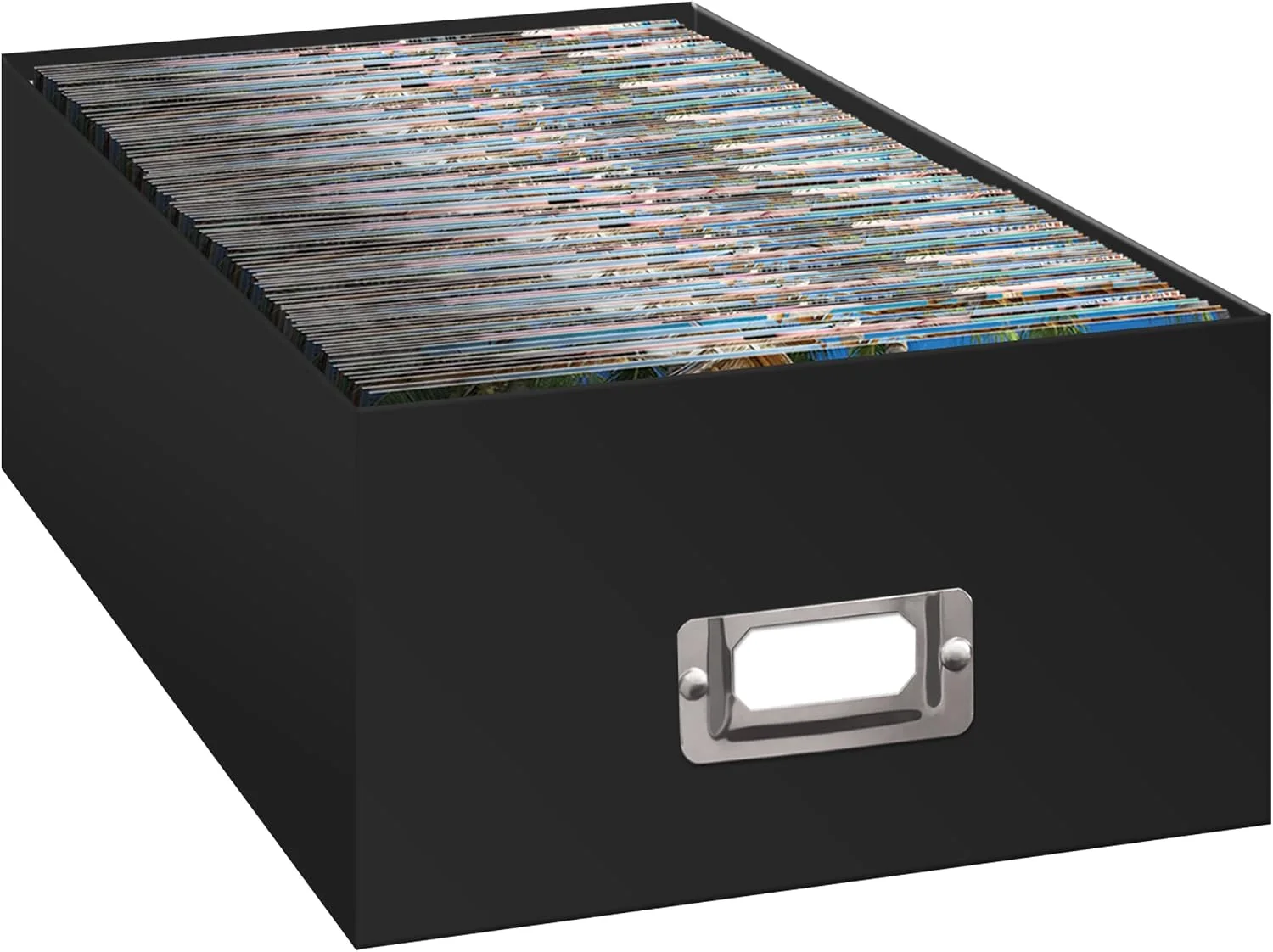
If you have a stack of envelopes or a shoebox of prints at the back of a closet, you have the most common collection in the country. Most families do. The good news is that a sensible adult, working at a kitchen table with a few inexpensive materials, can keep those prints in good shape for the rest of their lives and the lives of the people who come after. There is no museum budget needed. There is a little reading, a few habits, and a willingness to move the box out of the attic.
What a print actually is
A printed photograph, the kind you get back from a one-hour lab or a phone-app printer, is a layered thing. At the bottom is a paper base. On top of that is an image layer, which can be made of silver particles in gelatin (the older black-and-white prints and many color prints), of dyes suspended in layers (modern color prints), or of pigments (the newest inkjet prints). Some prints have a thin plastic coating on top, a kind of varnish that protects the image from scuffing and from the air. Most older prints do not. Some newer ones do.
The paper is the part that yellows and browns as it ages. The image layer is the part that fades, shifts in color, or, in old black-and-white prints, takes on a metallic sheen called silver mirroring. The plastic coating, when it exists, holds up better than paper but it can stick to glass or to other prints if the temperature climbs.
A print ages because its parts react with the air around them, with the water in that air, with light, and with whatever is touching it. The reactions are slow at room temperature and faster in heat. They are faster in damp air and slower in dry air. They are faster in light and slower in the dark. The trick is to slow the reactions down.
The three things that do the damage
Most of what goes wrong with a stored photograph comes from one of three sources.
The first is heat and humidity. Heat speeds up almost every chemical change that affects a print. Humidity does the same, and it lets mold grow on paper. The two together are worse than either alone.
The second is light. Light is energy, and the energy that lets you see a print is also the energy that breaks apart the dyes and silver particles in the image. A print left in a sunny window fades the way a curtain fades. The print you put on the wall will be a different print in ten years.
The third is the materials touching the print. Paper is acidic. Most of the paper in office printers, in magazines, in newsprint, in cheap envelopes, is acidic, and the acid migrates into whatever it touches. The cheap cardboard lid of a shoebox is mildly acidic. The clear plastic sleeve of a budget photo album can be made of PVC, which off-gasses and damages prints over years. Staples, paper clips, rubber bands, the adhesive on a sticky note, all of these leave marks or stains. The Library of Congress, the U.S. National Archives, and the Image Permanence Institute all warn about the same thing: a print kept in the wrong enclosure for twenty years will look worse than a print left loose in a drawer, in some cases.
If you remember nothing else from this article, remember this trio: heat and humidity, light, and what is touching the print.
Temperature and humidity, in numbers
The Library of Congress recommends a relatively dry, cool, and stable environment for most photographs. Their numbers: relative humidity between 30 and 50 percent, temperature at 70 degrees Fahrenheit or below, and as little variation in either as you can manage. The U.S. National Archives gives a wider range: temperature below 75 degrees Fahrenheit, relative humidity below 65 percent but not below 15 percent. Either set of numbers is fine for a home. The point is the same. The Library of Congress calls relative humidity the single most important factor for most prints.
What does that mean for a house?
A climate-controlled living room is fine. So is a bedroom closet on an interior wall. So is a hallway bookcase that is not against an outside wall. These are the good spots.
A damp basement is bad. The relative humidity swings high, especially in summer, and mold can grow on paper. A hot attic is bad. The temperature is high and swings daily. A garage is bad, for the same reason and because car exhaust and solvents can find their way in. Anywhere near a heating vent, a radiator, a water heater, or an exterior wall is worse than the middle of the room, because the temperature and humidity are more variable there.
If you have a single drawer of prints in a shoebox, living in a box on a closet shelf in your living room, you are doing fine. Move the box out of the attic and you have done the most important thing.
For color photographs and for film negatives, temperature is the controlling factor. The Library of Congress recommends cold storage at 40 degrees Fahrenheit or below for color materials. That is colder than a home and beyond what most families will set up. It is worth knowing that the rule exists, and that if you have, say, a box of 1990s slides of a first child, the cool closet is doing more for them than the hot attic would.
A simple hygrometer, the kind sold for cigar humidors, costs a few dollars and tells you the relative humidity in a room. If you put one in the closet where the prints live and it reads between 30 and 50 percent most of the year, you are in good shape.
| Where | What the archives say | What it means for a house |
|---|---|---|
| Temperature | Cool: 70°F or below (Library of Congress); below 75°F (National Archives) | A living-room shelf passes; an attic in July does not |
| Relative humidity | 30 to 50 percent, stable (Library of Congress); below 65 and above 15 percent (National Archives) | Not a basement, not a bathroom wall, not next to a radiator |
| Light | Limit exposure; display copies, keep originals in a box | The framed print on the sunny wall should be a reprint |
| Stability | Swings of less than 5 percent humidity in a day are the ideal | An interior room beats an exterior wall |
Light, and why the print on the wall should be a copy
Light damages images. There is no way around it. The print that hangs in a sunny window will fade. The print that hangs in a hallway with a lamp on it will fade slower. The print kept in a closed album in a drawer will fade slowest of all.
The institutional advice, and the sensible advice for a home, is to keep the original prints in the dark and put a copy on the wall. A reprint, a scan printed out, a phone snapshot of the print printed out, all of these are inexpensive ways to have a picture on the wall that you do not care about losing. The original goes back in the album.
If you must keep a print on display, choose a spot out of direct sunlight and away from the brightest lamps. UV-filtering glass in a frame helps. Lower light is better than brighter light. Rotate the display, so no single print gets years of exposure.
How to handle a print
A few habits, once learned, take a few seconds each.
Wash and dry your hands before you pick up a print. The Library of Congress says clean hands or clean nitrile gloves. For most home handling, clean hands are fine. What you are avoiding is the oil on your fingers, which sits on the image surface and, over years, can stain.
Pick up prints by the edges or the corners. Avoid touching the image surface. The skin is slightly acidic, and the print is slightly absorbent.
Do not use paper clips, rubber bands, or tape on a print. Paper clips dent and leave a tiny rust spot. Rubber bands degrade into a dark stain where they sit. Tape yellows and pulls the surface when it is removed. The Library of Congress lists all three by name.
If a print must be marked, write on the back, near the edge, with a soft graphite pencil. A No. 2 pencil is fine. A ballpoint pen is not. The ink from a ballpoint soaks through the paper over time and can show on the front. The graphite pencil is stable. Write small, in a corner, away from the image.
Stack prints in small piles, image side up, with nothing on top of them. If you are putting them into an envelope, slip them in one at a time, image away from the seam.
What "photo-safe" actually means
When a manufacturer says a material is photo-safe, the term has a specific meaning. The standard is ISO 18902, which covers the materials that come into contact with a stored photograph. Under ISO 18902, every material that touches the print must pass the Photographic Activity Test, which is ISO 18916. The Photographic Activity Test, run by the Image Permanence Institute, exposes the material to a print and to two detectors for a long time, in a hot, humid oven to speed up the reactions. One detector checks for fading and silver mirroring. The other checks for yellowing. If the material causes any of those, it fails.
The Image Permanence Institute lays out the standard plainly. Materials that do not pass the test can cause fading, yellowing, silver mirroring, and embrittlement in prints kept in contact with them. Materials that do pass are considered photo-safe.
The plastics that pass are uncoated polyester, polyethylene, and polypropylene. The papers that pass are acid-free and lignin-free. PVC, in most forms, does not pass. Cardboard with lignin in it does not pass. The clear plastic sleeves on a cheap album from a discount store may or may not be polyester. Without a label, you cannot tell.
The phrase you will see on a pack of photo-safe materials is some version of "acid-free, lignin-free, and PVC-free." That language refers to the materials that will be touching the print. It does not promise that the album will preserve the photograph in any way. It is a description of what the pages and pockets are made of. If you keep a print in an acid-free, lignin-free, PVC-free pocket in a closet, you have removed one of the three things that damage prints.
The pack on a Pioneer pocket album says the pages and pockets are acid-free, lignin-free, and PVC-free. The wording on the pack is the claim. We do not publish test certificates or laboratory numbers here. The standards the wording refers to are ISO 18902 and the Photographic Activity Test.
Albums: which bindings and mountings hold up
The U.S. National Archives lists the album bindings it considers safe: spiral, ring binders, post or clamp bindings, and traditional sewn bindings. The cover can be cloth, stable plastic, or leather. The Archives is clear that the cover matters less than the pages in contact with the photographs.
The safe mountings are the ones that hold the print without glue. A pocket album holds a print in a clear sleeve of stable plastic, with no adhesive on the print. A scrapbook holds a print on a page with photo corners, which are small triangles of acid-free paper folded over the corner, or inside a top-loading page protector with a heavy paper insert behind it. A sleeve of polyester or polyethylene, sealed on two or three sides, holds a single print without anything touching the image surface.
The U.S. National Archives warns against a specific list of materials and products. White glue, rubber cement, pressure-sensitive tape, "magnetic" albums with self-stick adhesive, non-stainless staples and clips, rubber bands, and PVC or unknown plastics are all on the list. The Library of Congress adds colored paper, ordinary paper, and any enclosure of unknown plastic to the list of things to avoid.
Two ground rules. First, do not overstuff an album. A stuffed album puts pressure on the prints in the middle, and the binding sags. Second, when in doubt, an enclosure of known plastic, sealed without adhesive, beats a clever mounting that uses glue.
The Library of Congress notes that many commercially available albums use photo-safe materials, and they recommend the pocket, sleeve, and corner systems over the sticky alternatives. Our pocket albums are made for 4x6, 5x7, and 8x10 prints, with clear pockets on a mesh background, no adhesive on the print, and a memo strip beside the pocket on the memo lines. Capacities run from 36 prints up to 504 prints in the high-capacity lines. The bookbound spine lies flat when the album is open, which matters when you are writing a caption.
| Enclosure or mounting | What conservators say | In our range |
|---|---|---|
| Clear pocket of stable plastic, no adhesive on the print | Safe: sleeves and pockets of polyester, polypropylene or polyethylene | Every pocket album and mini album |
| Photo corners on an acid-free page | Safe: mounting without glue | Scrapbook pages with corners bought separately |
| Sewn, ring, post or spiral binding | Safe binding styles | Bookbound, 3-ring, post-bound and spiral albums |
| Self-adhesive "magnetic" page | Avoid for long-term storage | Our magnetic albums, for mixed sizes and albums that get rearranged |
| PVC or unknown plastic | Avoid | Not used: pages and pockets are described on the pack as PVC-free |
| Glue, tape, rubber cement, clips, rubber bands | Avoid | Not needed with a pocket |
Our magnetic self-stick albums
Pioneer makes a line of magnetic self-stick albums, and the question is whether they are the right place for a print you want to keep for decades.
The product is a clear plastic overlay on a heavier page. You lift the overlay, place the print on the adhesive underneath, and press the overlay back down. The adhesive re-sticks, and the print sits flat against the page. The system is convenient for mixed sizes on the same page, for prints that do not fit a standard pocket, and for scrapbook pages where you want to add captions, stickers, and other paper.
The honest statement is that this is a different product than a pocket album, and it is for a different purpose. The adhesive is on the page, not on the print, and the print lifts cleanly off, but the adhesive is an adhesive, and the pages are not what archives recommend for long-term storage. For a child's school year that you want to flip through and then hand on, the magnetic album is fine. For prints you want to keep in the best condition for two or three decades, the pocket album is the one. The pocket album has clear pockets with no adhesive on the print and a memo strip beside the pocket for a line or two of writing.
This is the honest comparison, and it is the one we make on the pack.
The pocket is the thing that touches the print. What the pocket is made of is what the words on the pack are about.
If you want a single long-keeping album for the family prints, the pocket album is the one.
Pocket albums in our range
Three of the pocket albums. The print slides into a clear pocket; nothing is glued or taped to it.
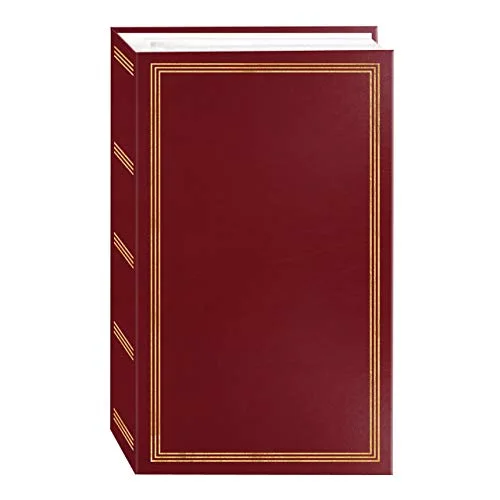
3-Ring Pocket Photo Album, 504 pockets
Burgundy Red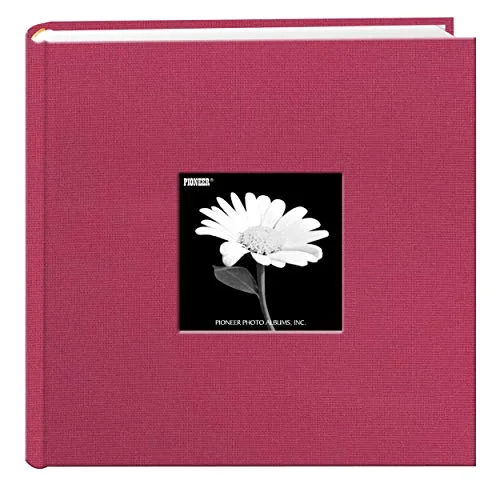
Fabric Frame Cover Photo Album, 200 pockets
Bright Pink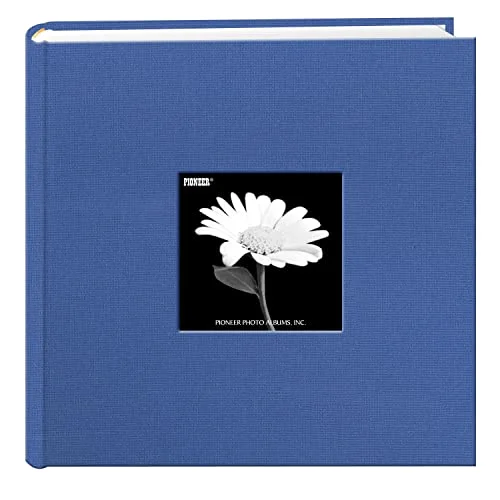
Fabric Frame Cover Photo Album, 200 pockets
Sky BlueBoxes for what is not in an album yet
Most families have more prints than they will put in albums in one sitting. A box is the right place for the rest of them.
A photo storage box is a rigid cardboard box, usually with a lid, sized for a stack of prints. The boxes we make have a metal identification plate on the front and a set of index cards inside, so you can write a label and find the box without opening every one. The interior is acid-free. The prints are not in contact with anything but each other and the inside of the box. A larger box, about 14.75 by 13 by 3.75 inches, holds 12x12 scrapbook pages. The rule is the same.
The rule with a box is the same as the room rule: cool, dry, dark, stable. A closet shelf is fine. The bottom of a closet is fine. The attic is not, the basement is not, the garage is not.
If you have a print that is loose, in an envelope of acid-free paper or in a box by itself, that is better than a print in a paper envelope from a drugstore in 1998. If you have the choice, transfer the loose prints into an acid-free box or an album when you can.
Negatives and slides, briefly
If you have negatives, the rule is to keep them apart from the prints. Negatives off-gas slightly as they age, and the gas can fade the prints they sit next to. A paper sleeve in a separate box is the minimum.
Color negatives and slides are the prints that fade fastest. The dyes in a color slide from 1975 are often already faded. The dyes in a color print from 2005 are more stable. The Library of Congress recommends cold storage for color materials: 40 degrees Fahrenheit or below. A refrigerator is colder than a closet, and a freezer is colder than a refrigerator, and both are colder than most homes will set up for a box of slides. If you have a small collection of slides that you care about, an airtight container in the back of a refrigerator, away from the freezer vent, is the next-best thing to a proper cold vault. Bring the container to room temperature before opening it, so the slides do not condense moisture on their surface.
Black-and-white silver negatives, properly fixed and washed, are the most stable film material. They keep for decades at room temperature in a paper sleeve.
This is the section where the institutional advice runs ahead of the home. Most families will do more for their prints by keeping the boxes out of the attic than they will by buying a freezer.
The realistic goal
The point of all this is not to make your house a vault. The point is to do the things that cost a little time and no money, and to skip the things that cost a lot of money and do not help.
A shelf, a box, an album, and a habit. That is the goal.
A shelf in a closet, away from an exterior wall, at the height of a grownup's hand, is the shelf. The temperature on that shelf is the temperature of the house, and the humidity is the humidity of the house, and that is good enough.
A box on the shelf, with the loose prints in it, is the box. The box is acid-free, labeled on the front, and not in the attic.
An album on the shelf, with the prints you want to look at, is the album. The album is the pocket kind, with clear pockets on a mesh background, no adhesive on the print, and a memo strip for a line or two. It holds 36 prints or 504. It does not promise to preserve them. It puts them in a place where nothing is touching them except the pocket.
A habit is the last piece. The habit is: move the box out of the attic, wash your hands before you flip through the album, and put the box back on the shelf when you are done. That is the habit.
Pioneer has been making albums in Chatsworth, California, since 1972. We are a family-owned company. The pockets, the pages, the boxes are what we make, and the words on the pack are what we stand behind. The rest, the temperature and humidity and light, is on the house.
The point is the photographs. The album is the thing that holds them. Get the box off the attic floor and put the album on the closet shelf, and you have done most of what can be done.
This article is general information about keeping printed photographs at home, drawn from the public institutions cited below. It is not conservation advice for a specific collection, and it is not a claim that any particular album will keep a given photograph in a given condition. For a valuable or damaged photograph, a photograph conservator is who to ask.