Pocket album, scrapbook or magnetic album: which one for which prints
Three formats explained once: print size, capacity as a real number, whether more prints will come, and what conservators say about self-stick pages.
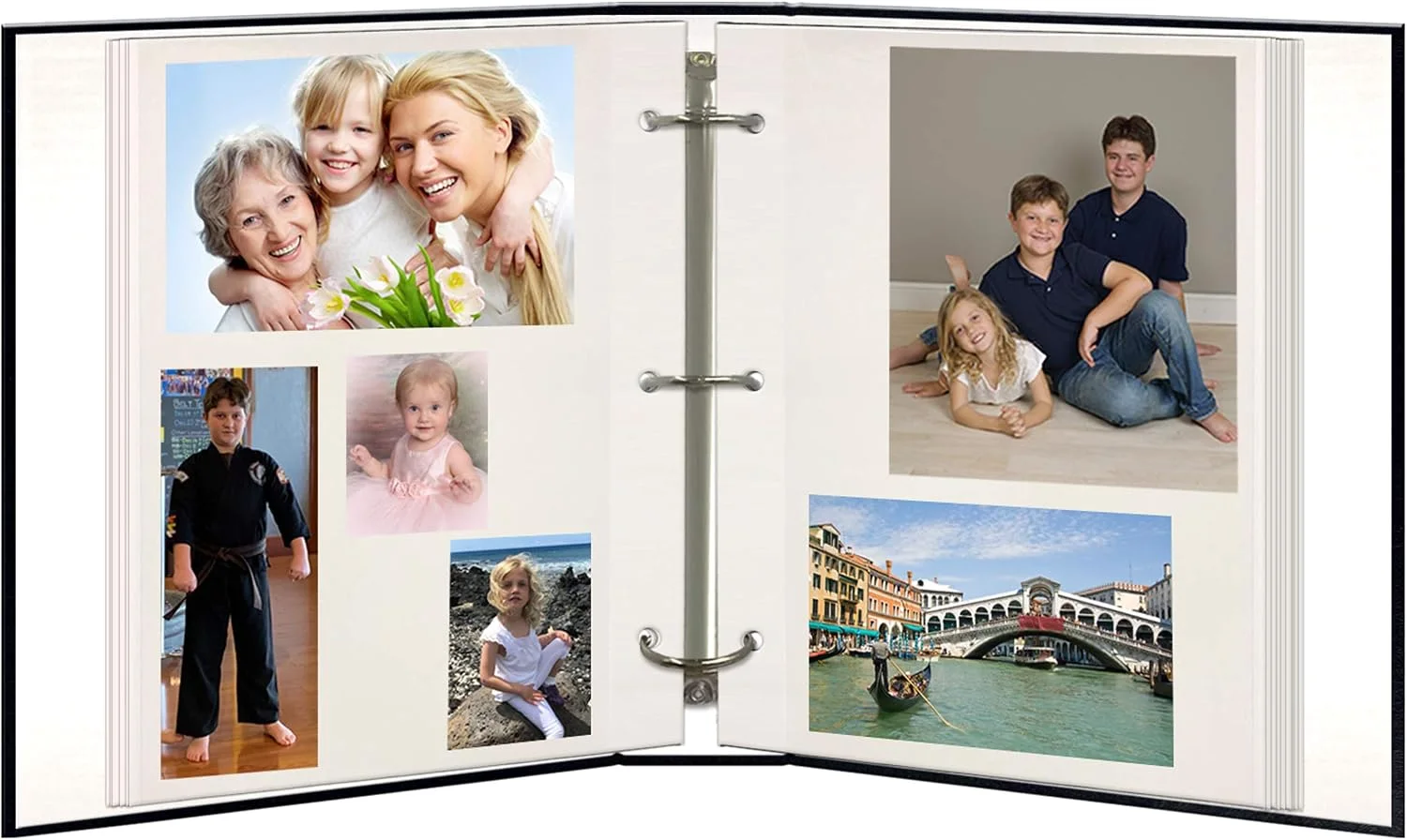
The three formats
A pocket album is the simplest of the three. Each print sits in its own clear pocket, and nothing touches the face of the photograph except the plastic. There is no glue, no corner, no sticky strip. On the memo lines, a small writing area sits beside each pocket so a date or a name can go right next to the print. We have been making pocket albums in Chatsworth, California, since 1972, and the design has stayed close to that idea for a long time. The pages and pockets are described on the pack as photo-safe, with materials that are acid-free, lignin-free, and PVC-free, and the optically clear pockets on some lines let the print show without a haze.
A scrapbook is a different kind of object. The page is blank, or nearly so, and the album is a place to build a layout. A photograph goes on the page, often with other things beside it, and the whole page slides into a clear protector that sits on a post-bound or 3-ring spine. When more pages are needed, the album opens and refills go in. The scrapbook is the format for the person who wants to arrange, not just store.
A magnetic album is a self-stick page with a clear plastic overlay that lifts and lays back down. A print goes on the page, the overlay comes down over it, and the page holds. No pocket, no corner, no glue. The same page can take a wallet print next to a 4x6 next to a 5x7, which is the appeal and the trap of the format. The pages are around 8x10 to 8x12 inches, and they hold wallet, 4x6, 5x7, and 8x10 prints on the same page.
| Format | What holds the print | Best for | Takes refills |
|---|---|---|---|
| Pocket album | A clear pocket; nothing on the print | Prints of one size, kept for decades, with a date beside each | Bookbound: no, choose the capacity; ring and post pocket albums: yes |
| Scrapbook | A page you build, inside a top-loading protector | Photographs with tickets, cards and captions; a book made by hand | Yes: post-bound and 3-ring |
| Magnetic album | A self-stick page with a lift-and-stick overlay | Mixed sizes on one page; an album that gets rearranged | Yes: 3-ring and expandable spines |
Print size, the first question
The first question to ask is the size of the prints in the pile. Most prints from a phone, a one-hour lab, or a printer at home come out at 4x6. A pocket album for 4x6 prints is the easiest match, and most of the pocket album lines on this site are built around that size. If the pile in front of you is 4x6, the choice has narrowed to which pocket album, not which format.
5x7 prints are larger and less common. A few pocket album lines take 5x7, and a 5x7 print fits on a scrapbook page with room around it. 8x10 prints exist as a pocket line too, and they also fit on a 12x12 scrapbook page with a margin. If the pile is mixed, a magnetic self-stick page handles the mix without ceremony, because the overlay adjusts to the print.
Instant prints from a Fujifilm Instax camera or a Polaroid camera are a different size, roughly credit-card, and they need their own album. Trying to fit them into a 4x6 pocket is a known frustration. The IS-80 line on this site holds 80 of those prints, two per page, and it has a frame on the cover for one of them.
12x12 is a page size, not a print size. It is the size of a scrapbook page, and a 4x6 or 5x7 print sits on it with a lot of room around it. If you have been searching for a "12x12 album" for your photographs, what you have found is a scrapbook, not a print size. The print sizes on this site also include 3.5x5, 4x7, 6x8, 8x8, and 8.5x11, but 4x6 is the print most readers are holding.
How many prints, and what capacity really means
The second question is how many prints there are. Capacity is not a vague idea on this site. It is a real number, and it sits in the product name.
Pocket albums on this site run from 36 prints up to 504 prints. The common sizes for a family year, or a long trip, are 200 and 300. A 200-print album takes roughly 40 pages of five pockets. A 300-print album takes roughly 50 pages. Both are bookbound, so the capacity is fixed.
The largest pocket albums hold 500 prints, with five pockets to a page. Three of the pockets are horizontal and two are vertical, and on the memo lines each pocket has its own writing area beside it. These high-capacity albums exist because some households print a lot, and because a 500-print album is roughly the size of a hardcover novel, not a coffee-table book.
The arithmetic of pockets per page is worth knowing. Two pockets to a page means the album is roughly half as thick as a three-pockets-to-a-page album of the same capacity. Three pockets to a page is the common layout for 4x6. Five pockets to a page is the layout for the 500-print lines. The number of pockets per page changes how the album feels in the hand, and how long it takes to fill. A reader who fills an album at a kitchen table on a Sunday afternoon will notice the difference between two and five pockets per page within the first ten prints.
A reader who has 800 prints from a long project should think about two albums, not one. Two 400-print albums sit on a shelf better than one 800-print album, and the project can be split into two halves. The arithmetic of capacity is also the arithmetic of the shelf.
| Prints per year | Album that fits | Pockets left for later |
|---|---|---|
| Up to 150 | A 200-pocket album | About 50 |
| 150 to 250 | A 300-pocket album | 50 to 150 |
| 250 to 450 | A 500-pocket album, five to a page | 50 to 250 |
| More than 450, or many sizes | Two albums, or a scrapbook with pockets | As many as you leave |
Will more come, and what the spine decides
The third question is whether more prints will come. Some albums end at the number on the cover. Others open and take more.
A bookbound pocket album is fixed. Once the last pocket is filled, the album is full. This is not a flaw. For a wedding, a first year of a baby, or a single trip, a fixed capacity is the right answer. The album closes, the cover goes on, and the project is done. A bookbound album also lies flat when it is open, which is the small detail that makes filling it at a table easier.
A scrapbook on a post-bound or 3-ring spine takes refills. The pages come out, new pages go in, and the album grows. The screw posts extend with extension posts when the album gets thick. A magnetic album on a 3-ring or post-bound spine also takes refills, and the X-Pando line has an expandable spine that grows with the album.
The way to know which kind of spine an album has, after the fact, is to look at the style number printed inside the album, usually on the back endpaper or the inside of the back cover. The style number tells you which refill pages fit. A reader who plans to keep adding prints should pick a spine that takes refills, and write the style number down somewhere outside the album. Style numbers are easy to lose, and a refill page that does not match the album is a common frustration. The refills on this site are made for a named album line, and the matching style number is the way to find them.
The memo strip, and why a date beside a print is worth more than a caption in an app
The memo strip on a pocket album is a small writing area beside each pocket. It is a few lines of white space on the page, and a pen goes there. A date, a name, a place. The strip is part of the design, not an afterthought. The memo lines are a long-standing part of the Pioneer line, and the writing area is built into the page.
A caption in a phone app is a different object. It lives on a server somewhere, it sorts by date, it can be searched, and it can be lost when the phone is lost. A date written in pencil on the page beside the print is in the same place as the print, in the same book, on the same shelf, twenty years from now. The phone may be in a drawer. The album will be on a shelf.
There is also a quieter reason. Writing the date is the moment a person finishes with a print. The print is no longer loose in a box. It has a place, and the place has a name. The act of writing takes ten seconds a print, and it is the difference between a pile of photographs and an album. The print is no longer a file. It is a page.
The memo strip is not on every pocket album. The lines that have it are called the memo lines on this site, and the writing area is part of the page. A reader who wants to write beside the prints should look for the memo lines. A reader who wants a clean pocket and nothing else should look for the lines without a writing area. Bi-directional pockets, which hold a horizontal or a vertical print in the same pocket, are also a feature on some lines, and they make the album flexible about which way a print faces.
The scrapbook in detail
The scrapbook is the most open of the three formats. A 12x12 page is roughly the size of a sheet of typing paper trimmed down, and the album sits flat on a table when it is open. The page sizes on this site are 12x12, 8x8, 8.5x11, and a jumbo 11.75x14. The 8x8 is a square that suits a square print or a single 4x6 with room around it. The 8.5x11 is the size of a sheet of office paper. The jumbo is for projects that need a lot of room, and a storage box on this site holds the finished 12x12 albums.
The page itself is blank, and the photograph goes on it. The page then slides into a top-loading protector, which is a clear plastic sleeve that opens at the top. A heavy paper insert sits behind the page in the protector, so the page has weight and the photograph does not show through to the next page. The insert slides out while the protector stays in the album, which means a reader can change a page without taking the protector off the spine. The protector stays on the spine. The page comes out. The photograph is the part that moves.
What people put on a scrapbook page besides photographs is the part of the format that has no answer. A ticket stub. A leaf pressed flat in a book for a week first. A label from a bottle of wine. A handwritten note. A drawing by a child. A map with a route drawn on it. A postcard from a friend. A lock of hair, in a small envelope. A newspaper clipping, copied onto acid-free paper so the newsprint does not touch the print. The scrapbook is the place for the things that are not photographs but belong with them, and the album holds them all under one cover.
The post-bound spine matters because it is the spine that takes the heaviest pages. The screw posts are metal, and they extend with extension posts as the album gets thicker. A 3-ring spine takes refills too, and refills for either spine are sold on this site by the style number. A reader who plans a long project, or who is not sure how many pages the project will need, should pick a spine that takes refills from the start. The fabric, book-cloth, and leatherette covers on the scrapbook lines, many with a frame window on the front, turn the album into an object with a face.
The magnetic album in detail
The magnetic self-stick album is the format with the strongest pull and the sharpest warning. Both are worth understanding.
The format is good at three things. It takes prints of mixed sizes on the same page, which a pocket album cannot do. It lets a reader move a print, because the overlay lifts and the print comes up with it. And it lets a reader lay out a page like a small board, with prints at different angles and sizes, the way a person arranges photographs on a table before gluing them down. The pages are around 8x10 to 8x12 inches, and they hold wallet, 4x6, 5x7, and 8x10 prints on the same page. The 3-ring and post-bound spines take refills, and the X-Pando line has an expandable spine.
The warning comes from the people who keep photographs for a living. The National Archives recommends avoiding albums with self-stick adhesive pages and PVC plastics. The Library of Congress recommends avoiding albums with colored, "magnetic", or sticky self-adhesive pages, and notes that many commercially available albums use photo-safe materials. The reason is that the adhesive is in contact with the face of the print, and over decades the adhesive can do things to the print that cannot be undone.
For prints meant to keep for decades, the pocket album is the format that keeps the print free of adhesive. The print sits in a clear pocket and the pocket is the only thing that touches it. A scrapbook page can also keep the print free of adhesive, with photo corners or mounting squares, but a scrapbook is a project, not a place to drop prints in.
The honest summary is this. A magnetic album is a fine place for a year of prints that will live on a shelf and be looked at now and then. A magnetic album is not the right place for the prints a reader means to hand to a grandchild. For those, the pocket album with the print in the pocket is the safer choice.
One of each in our range
A pocket album, a scrapbook and a magnetic album. Each shelf page has every size and colour.
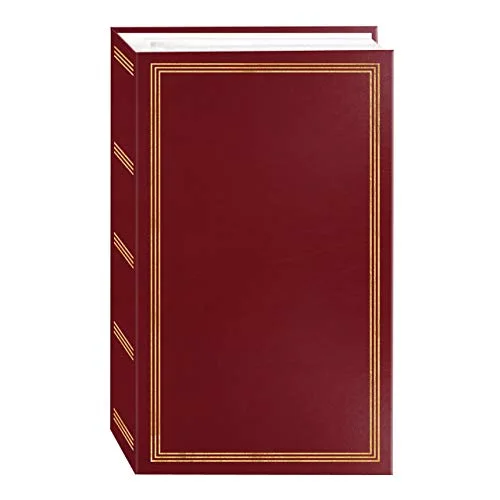
3-Ring Pocket Photo Album, 504 pockets
Burgundy Red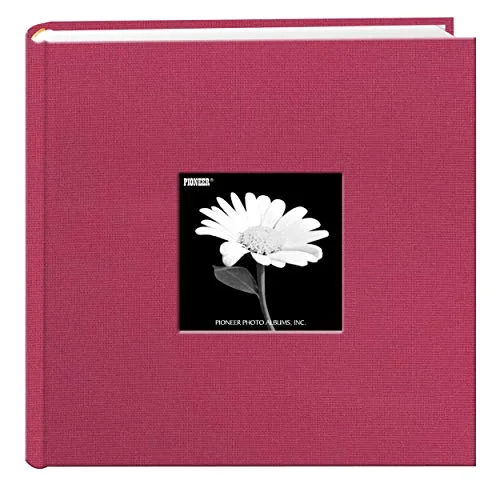
Fabric Frame Cover Photo Album, 200 pockets
Bright Pink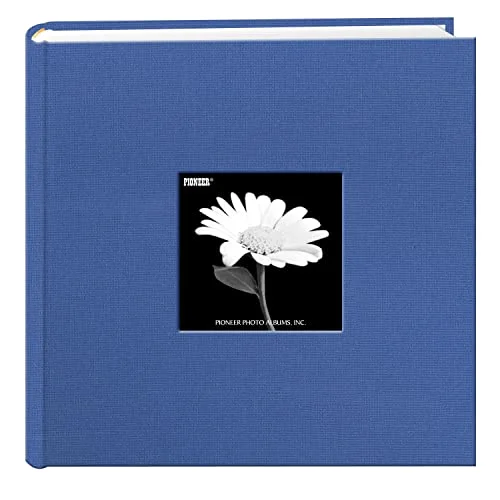
Fabric Frame Cover Photo Album, 200 pockets
Sky BlueCovers, and whether they matter
The cover is the part of the album a reader sees first, and it is the part that matters least for the photographs inside.
The National Archives notes that safe album bindings include spiral, ring binders, post or clamp bindings, and traditional sewn bindings, and that the cover can be cloth, stable plastic, or leather. The same source makes clear that the quality of the pages in contact with the photographs matters more than the cover.
That order is worth keeping in mind. A beautiful cover over pages that are not photo-safe is a worse album than a plain cover over pages that are. The cover is for the hand and the shelf. The pages are for the photographs.
Pick the album for the prints it will hold, not for the way it will look on the shelf.
The cover matters when the album is a gift. A sewn leatherette cover, a European bonded leather cover, a fabric cover, or a cover with a frame window for a favourite print all turn the album into an object with a face. A reader giving an album to a parent, a grandparent, or a friend will think about the cover. A reader keeping the album for themselves should think about the pages first.
For pocket albums on this site, the covers run from sewn leatherette to European bonded leather to fabric and faux-suede. Some covers take a favourite print in a window on the front. The bookbound spines lie flat when the album is open, and some Pioneer lines have an expanding library spine or a strap to keep the album closed on a shelf. A frame-front cover with a 4x6 print in the window is the simplest way to make the album look like the project it holds.
Mini albums and the instant-print album, briefly
Mini albums and instant-print albums are a smaller corner of the catalogue, and they have a clear job.
A mini album is small enough for a handbag, and the capacities run from 24 prints up to 100 prints. The layouts are one print per page or two prints per page. The covers are sewn leatherette with an embroidered patch, a piped edge, or a printed designer cover. A mini album is the right place for a small pile of prints that travel with a person, or for a print or two from a day that mattered.
The instant-print album is built for Fujifilm Instax prints and Polaroid credit-card-size prints. The IS-80 holds 80 of those prints, two per page, and it has a frame on the cover for one of them. The frame on the cover is the small detail that turns the album into a gift, because the cover print can be the favourite.
If you have been printing from an Instax camera for a year, you will have a pile of prints that do not fit anywhere else. The instant-print album is the place for them. Trying to fit them into a 4x6 pocket is a known frustration, and the instant-print album exists because the prints are a different size. A mini album is not a substitute for the instant-print album, because the prints are not the same size as a 4x6.
Pocket, scrapbook, or magnetic
The pocket album is for the prints a reader means to keep, with a date beside each one and no adhesive on the face. The scrapbook is for the project, with a blank page, a protector, and room for the things that are not photographs. The magnetic album is for the year on the shelf, with mixed sizes and a page that lifts and lays back down.